
Bridging the Gap: Turning Friction into Flow and Boosting Conversion by 10-15% Through Seamless Omnichannel Experiences
10–15% Conversion Rate Boost
By integrating in-store and online experiences, we expect to see a 10–15% increase in conversion rates, reducing friction and streamlining the customer journey.
2% Sales Growth on Digital Platforms
Our intuitive, customer-centric design strategies contributed to a ~2% increase in sales on digital platforms, reflecting the impact of a cohesive omnichannel experience.
5-10% Drop in Cart Abandonment
The frictionless experience we implemented, with seamless transitions between digital and in-store touchpoints, is anticipated to reduce cart abandonment by 5–10%.
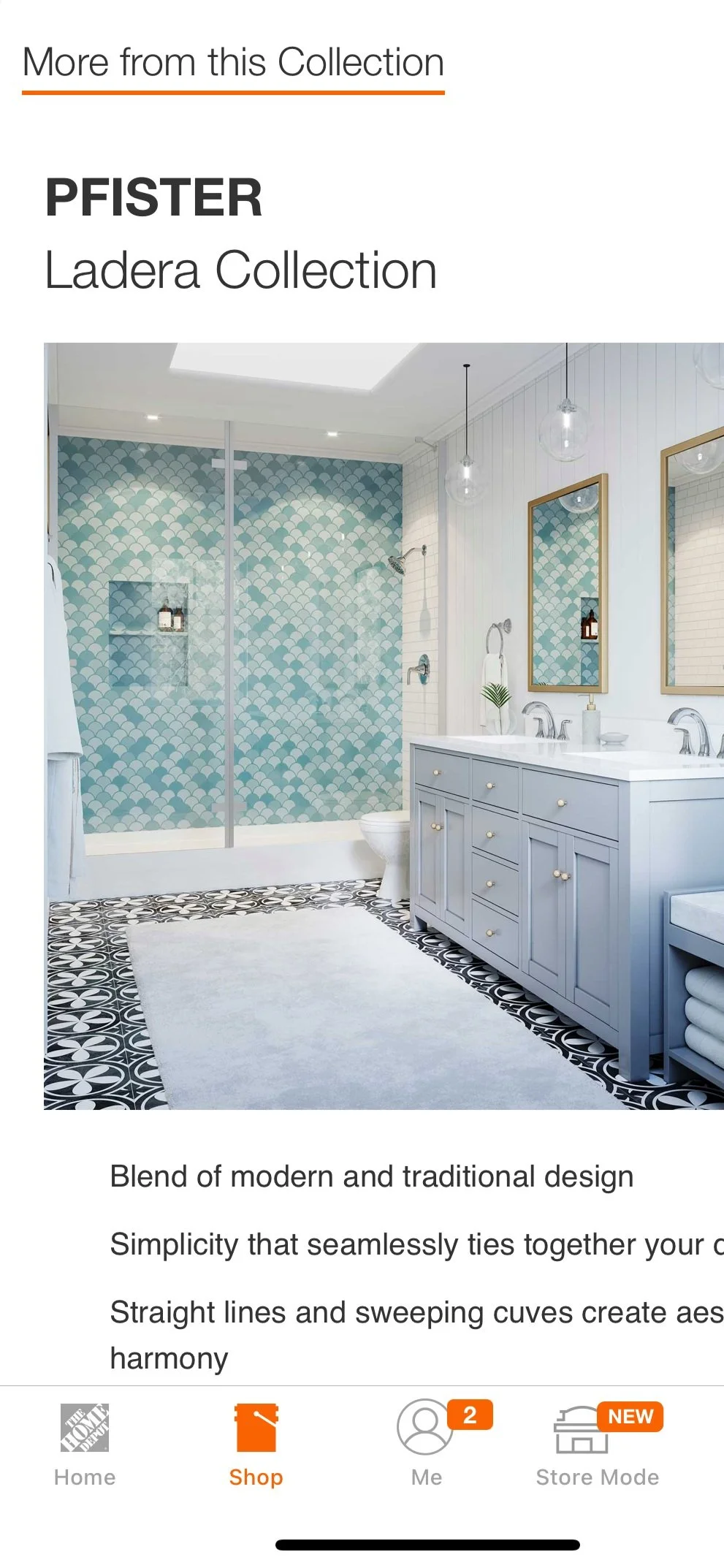
Turning Friction into Flow: Bridging In-Store and Online Experiences for a Faster, More Confident Purchase Journey with 'Make It Match' Collections
Emily, a homeowner in Austin, TX, is remodeling her children’s bathroom. After hours of online and in-store research, she still feels unsure about the products she’s selecting. Should she opt for a bold, eclectic mix of fixtures or create a unified, matching design for a more cohesive look?
For customers like Emily, the shopping journey is often a back-and-forth between online and in-store touchpoints, trying to visualize how products will look together in real life. While the in-store experience did a great job of grouping products together, the online Collections experience lacked the same clarity. Customers were often left confused by product duplication, mismatched swatches, and inconsistent groupings across digital touchpoints.
Additionally, our research revealed that a critical part of the customer decision-making process involves sensory touch and seeing products in real-life lighting, something that is often hard to replicate online.
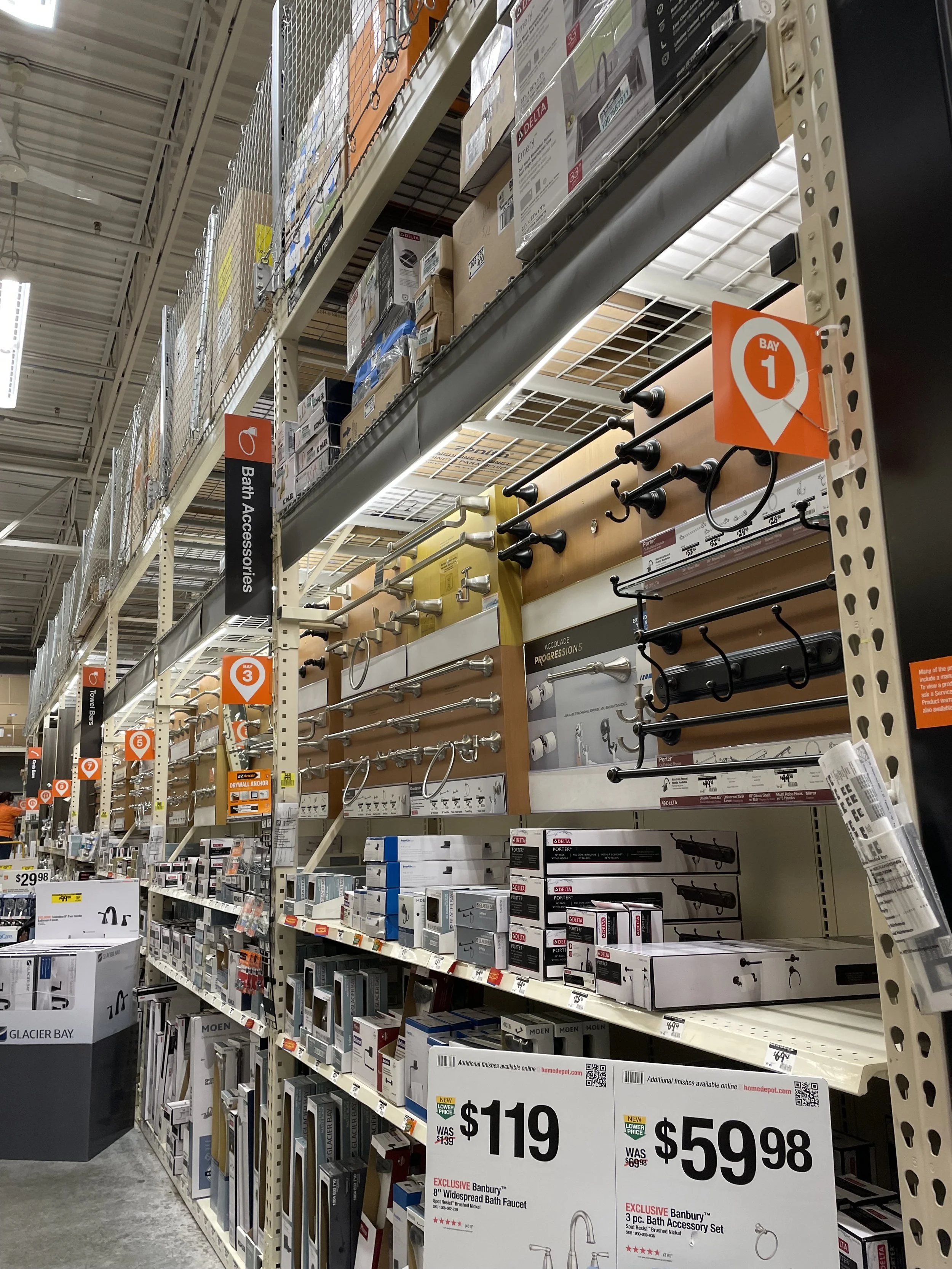
Building Connections: Crafting a Unified Omnichannel Experience Through Collaboration and Strategy
The goal was clear: How can we seamlessly connect the in-store and online shopping experiences to guide customers through their journey, whether they’re shopping at home or in-store?
My strategy was to create a cohesive omnichannel experience that offered customers like Emily clarity in their decisions. By linking in-store displays with the online Collections, we ensured a consistent, discovery-focused shopping journey. This approach aimed to increase customer confidence, reduce cart abandonment, and boost conversion rates, directly contributing to higher average order value (AOV).
As the Senior UX Designer leading UX Strategy, I leveraged insights from UX interviews and immersive in-store research to understand customer needs and behaviors. I collaborated with cross-functional teams to ensure product groupings were intuitive, and in-store associates’ insights helped us refine the design. The end result was a unified shopping experience that met both customer expectations and business goals.
Connecting In-Store & Online Touchpoints: I proposed a unified strategy for product displays across both environments, ensuring easy transitions between the two and reflecting the way associates group products in-store.
home depot associates
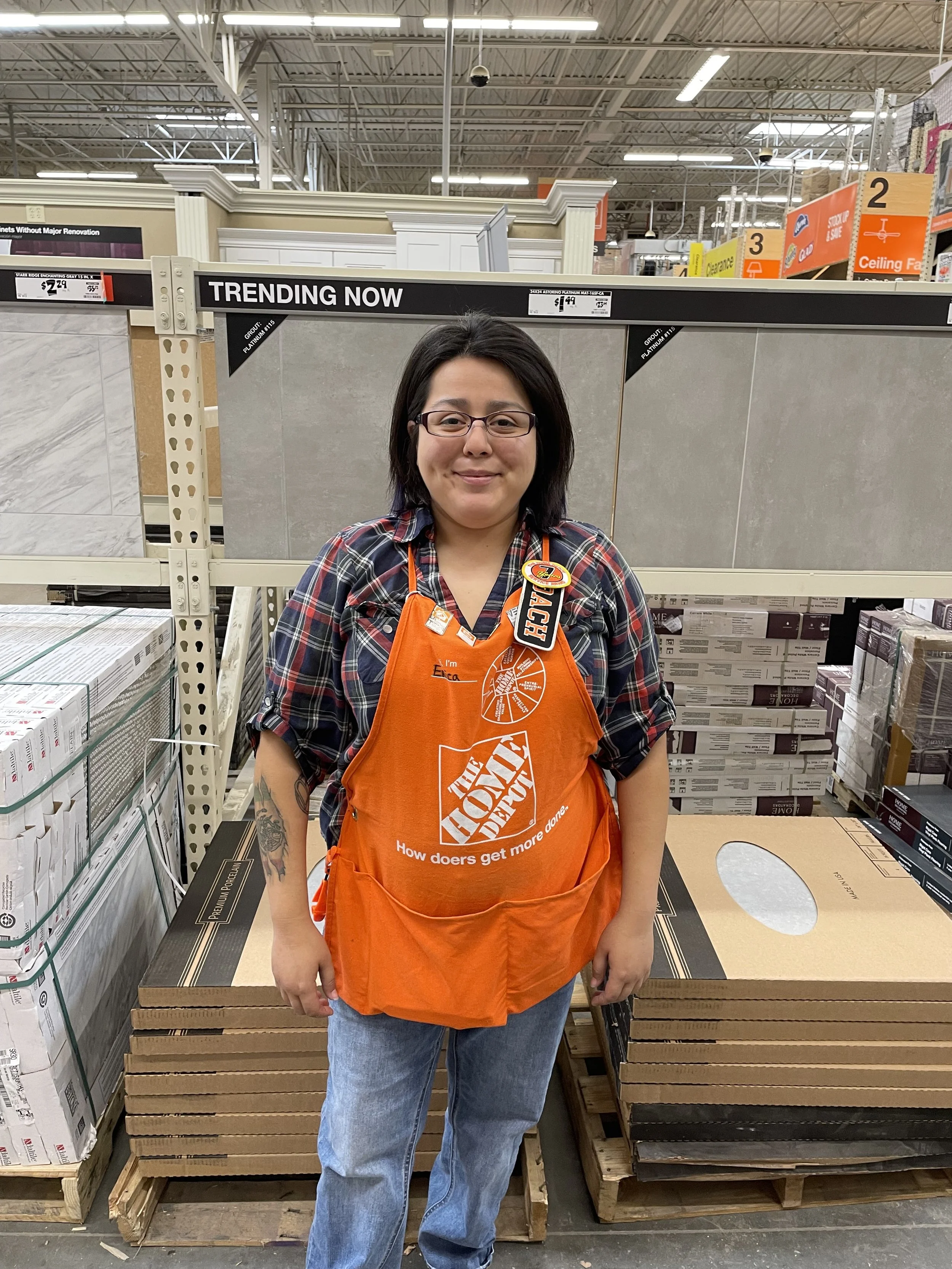
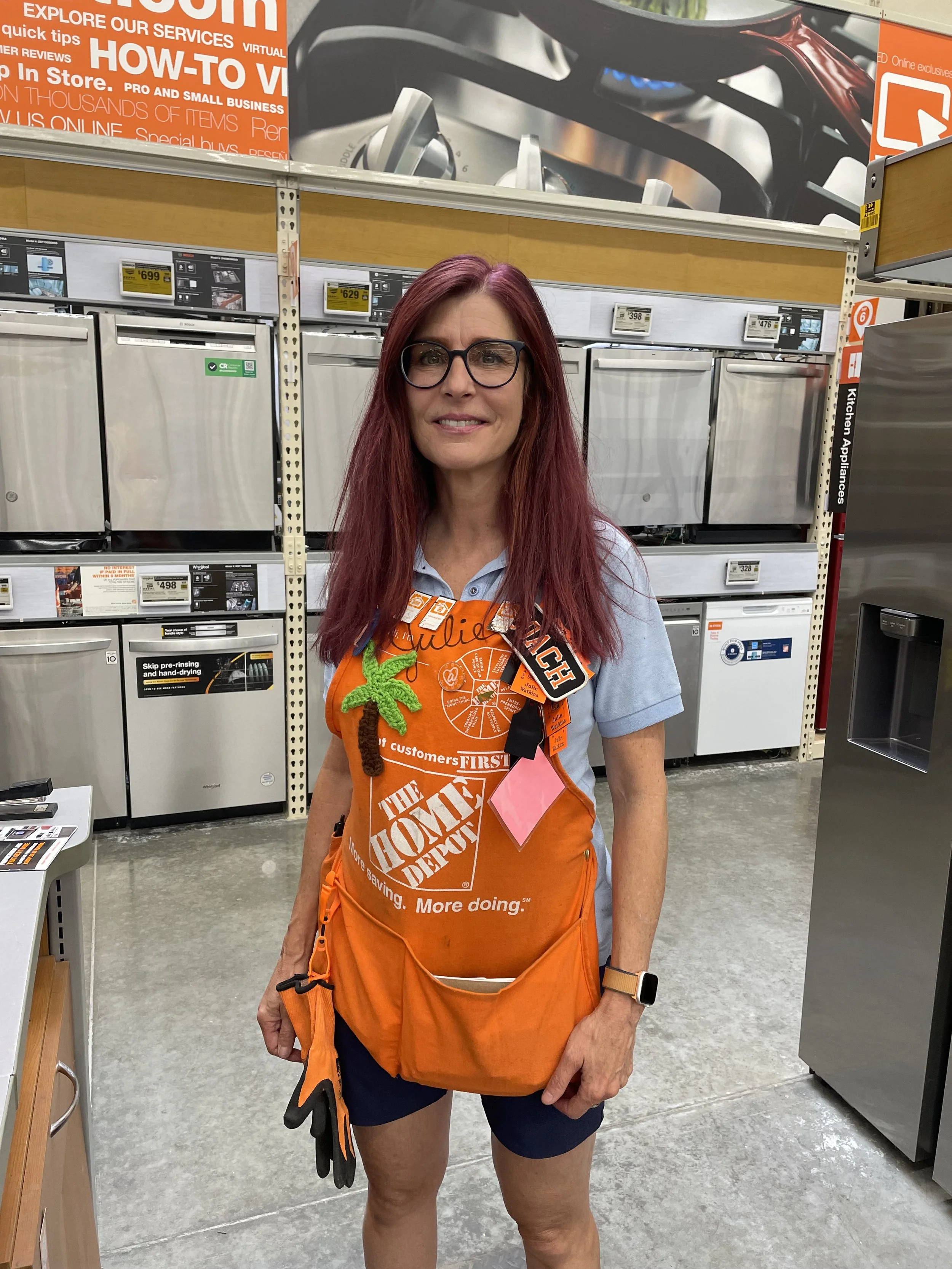
bath customer journey map
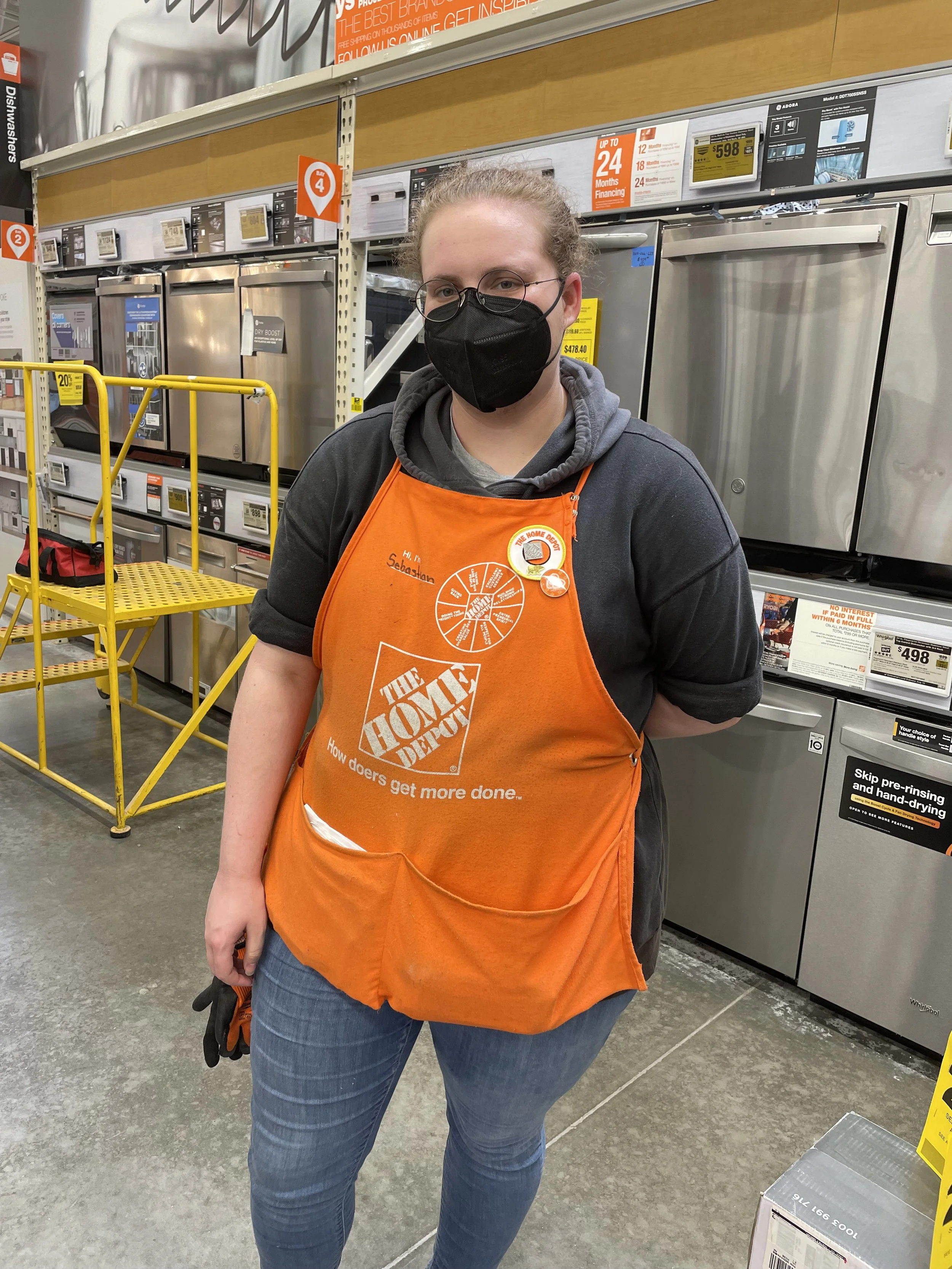
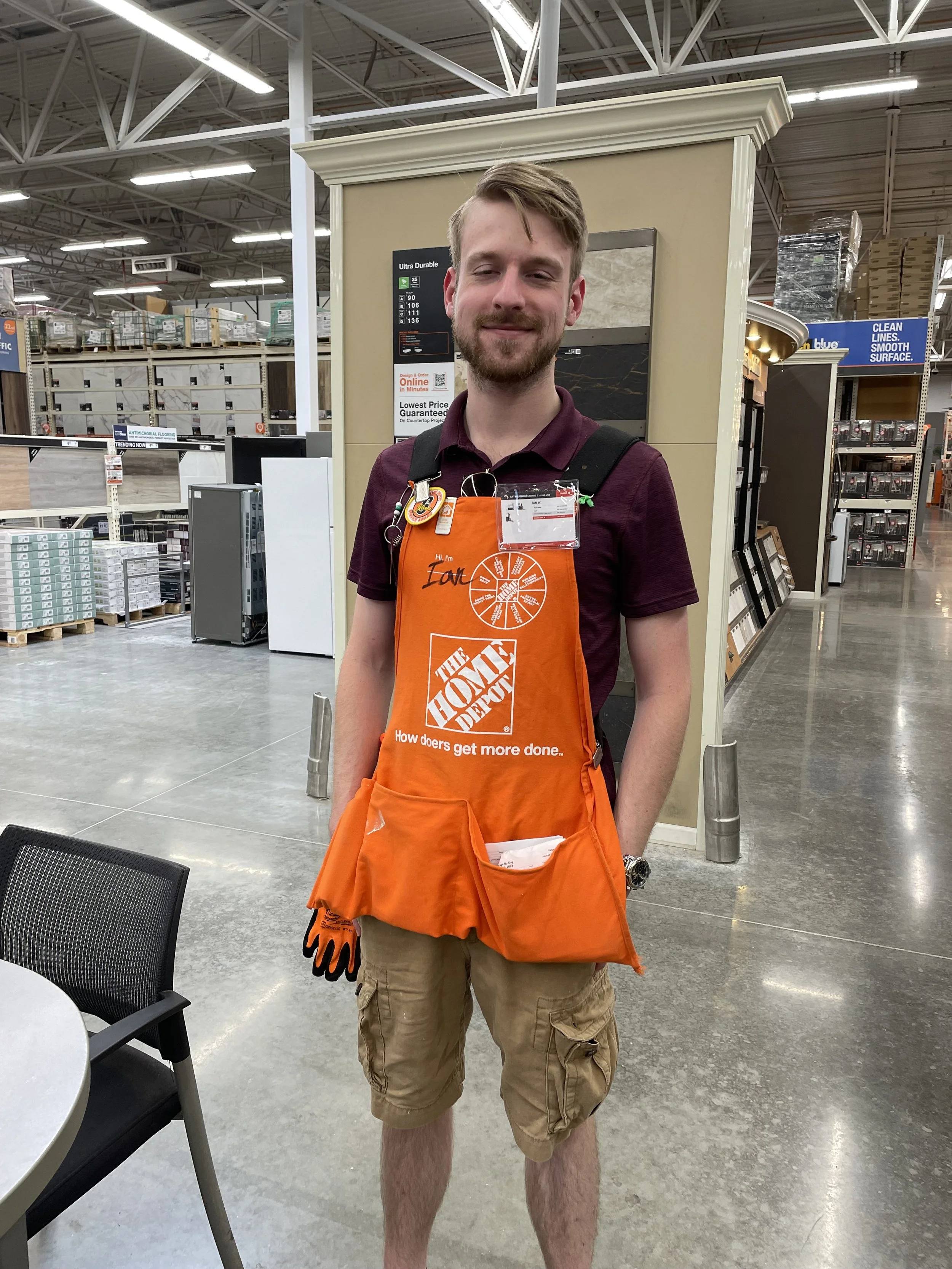
Omnichannel Strategy: The solution needed to bridge sensory touch and visual experience, with the contextual title and product layout serving as visual aids that helped customers understand how products fit together across both online and in-store touchpoints.
Journey Mapping: Working with the team, I mapped out the customer journey to identify key pain points and what information was needed at each stage. In-store associate insights on common confusion points helped simplify and streamline the experience.
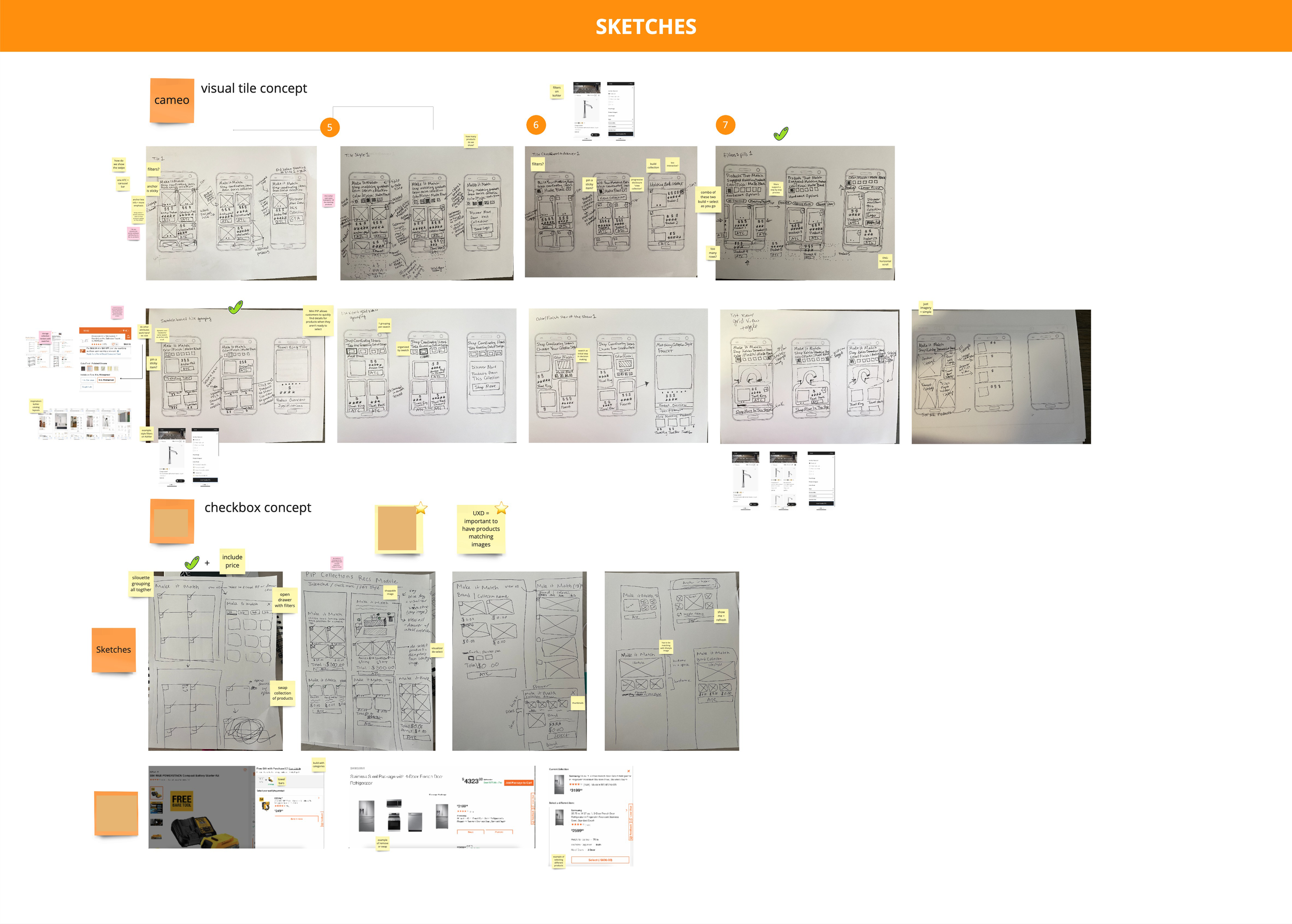
Collaborative UX Approach: I led a workshop to align the team on what a Collection is and the prototype design we agreed to test. We collaborated on sketching solutions and voted on the best ones, ensuring all partners were actively involved in the design process and felt part of the journey.
Designing for People, Aligning with Business
Through UX interviews, competitive analysis, and in-store research, we identified key insights that shaped our strategy:
Customer Behavior: Customers often move between online and in-store shopping, using tactile experiences in-store to validate choices and online for research. Sensory touch and seeing products in real lighting are crucial but hard to replicate online.
In-Store Experience Strengths: In-store displays excelled at grouping matching products and showing how they fit together. In-store associates played a vital role in educating customers on product matches and collections, influencing how we structured the online experience.
Customer Needs: Customers often experience frustration transitioning between online research and in-store decisions. Understanding this, we streamlined the process to provide better support across touchpoints.
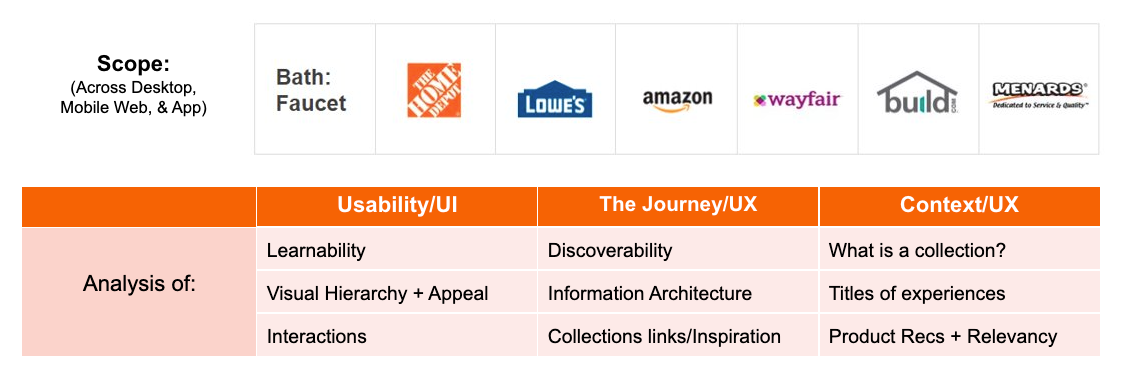
Competitive Benchmarking: Successful brands use simple designs with a focus on visuals, clear styling descriptions, and context. This approach allows customers to easily scan through styles, similar to browsing in-store. We applied these principles to ensure visual clarity and contextual consistency, helping customers continue their shopping journey and find the right style.
competitors and criteria considered in competitive analysis
Empowering Experiences: Transforming Customer Journeys with Seamless, Scalable Design
Building on in-depth research, the strategy was designed to create a seamless and intuitive experience between in-store and online shopping, addressing customer needs and guiding them through their journey:
Consistency Across Touchpoints: Unified product displays online and in-store ensured clarity. Contextual title updates helped guide users through the process with better product categorization.
Real-Life Visualizations: By incorporating lifestyle imagery, we empowered customers to visualize how products would look in their own spaces, creating a clear, contextual experience—just as they would in-store.
Progressive Disclosure: We introduced a progressive approach that reduced overwhelm, presenting curated selections upfront while allowing customers to expand and explore at their own pace.
Omnichannel Integration: A seamless experience across touchpoints allowed customers to transition effortlessly between online research and in-store decisions, enhancing confidence and reducing friction.
Mobile Integration: To support flexibility, we optimized the design for mobile, allowing customers to research, refine, and shop on-the-go.
Iterative Testing and Refinement: Through user testing, we validated the solution’s impact, and while some in-store elements are still being refined, each iteration has brought us closer to creating a fully integrated experience. This work also laid the groundwork for higher CLV, as improved shopping experiences foster long-term customer loyalty and repeat purchases
Algorithm Implementation : Working closely with the data science team, we implemented an algorithm update to improve product and swatch matching within Collections, eliminating inconsistencies caused by manual input. This created a more cohesive shopping experience, enhancing product relevance and driving smoother customer interactions.
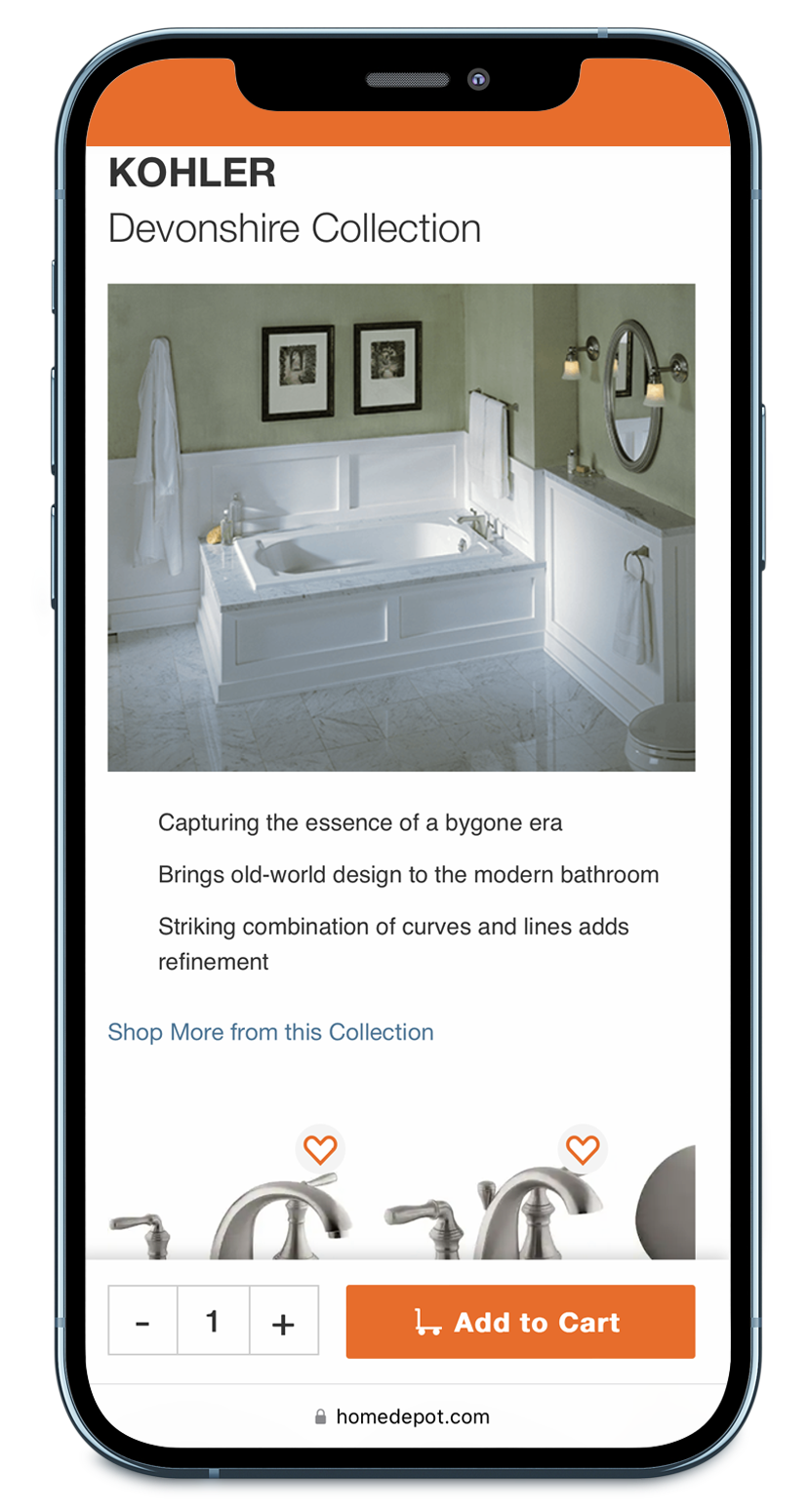
before
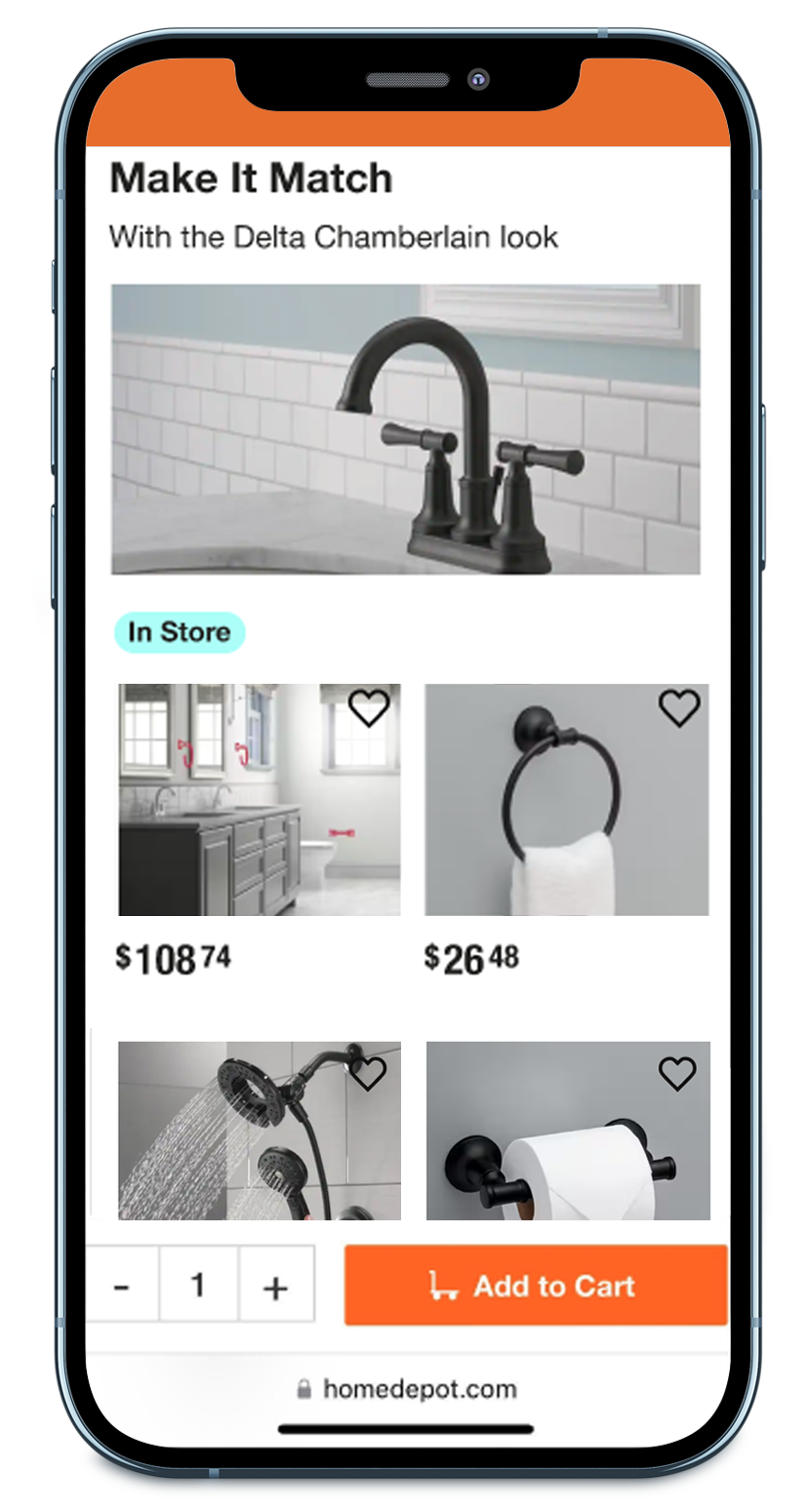
after
Measuring Progress: Early Impact and Building Toward Greater Success
Algorithm-Driven Success
The algorithm streamlined product recommendations by matching products based on color, increasing clarity and consistency. This improved decision-making, engagement with collections, and contributed to a ~2% sales increase on digital platforms.
Increased AOV & Conversion Rates
“Make it Match” recommendations led to a 10-20% increase in AOV by driving customers to complementary products. The integration of in-store and online experiences is expected to boost conversion rates by 10-15%, enhancing the shopping journey.
Reduced Cart Abandonment
The frictionless experience, powered by omnichannel integration, is expected to reduce cart abandonment by 5-10%, making it easier for customers to complete their purchases across both digital and in-store touchpoints.
Reduced Cognitive Load
By simplifying product groupings and streamlining the decision-making process, we helped reduce cognitive load, making the shopping experience more efficient and enjoyable for customers.
Operational Efficiency & Scalability
Automation of product curation improved efficiency, ensuring that collections were always up-to-date. The solution also provides a scalable framework for expanding to other product categories, allowing for future growth.
Building for the Future: Key Takeaways and Next Steps in Creating Seamless, Scalable Experiences
Customer-Centric Design: Understanding customer behaviors and preferences, including their need for tactile touch and real-life visualizations, is key to creating a shopping experience that resonates with and satisfies customers.
Cross-Team Collaboration: Aligning diverse teams around a shared vision ensures more innovative and effective solutions, ultimately resulting in a more cohesive and engaging shopping journey for customers.
Iterative Testing & Research-Driven Decisions: Continuous refinement based on user feedback and in-store research ensures that the solution meets evolving customer needs. In-store insights were particularly valuable in bridging gaps in the omnichannel experience and informing the design.
Operational Efficiency & Reduced Cognitive Load: By simplifying the decision-making process and organizing product groupings clearly, we reduced cognitive load, making the shopping experience more efficient and enjoyable for customers.
In-Store Associate Empathy Plan: This work inspired the creation of an in-store associate empathy plan, encouraging corporate associates to understand the in-store environment better. This initiative has enhanced cross-functional collaboration and empathy, leading to a more unified approach across teams.